Early Years Education: Building Strong Foundations for Lifelong Learning
The early years of childhood are among the most important stages of human development. From approximately two to six years of age, children develop the foundations for future learning, emotional wellbeing, communication, relationships and independence. During these formative years, every conversation, game, story and shared experience contributes to the way children understand themselves and the world around them.
Young children are naturally curious learners. They discover new ideas by playing, asking questions, experimenting, moving, observing and interacting with the people around them. Whether they are building with blocks, pretending to run a shop, exploring nature, painting a picture or helping prepare a family meal, children are developing essential skills that support both current and future learning.
Early childhood education is therefore about far more than preparing children for primary school. High-quality experiences in nursery, preschool, kindergarten or Reception help children develop confidence, communication skills, emotional security, creativity and a positive attitude towards learning. These qualities often have a lasting influence on their educational journey long after they leave the early years classroom.
It is equally important to remember that every child develops at their own pace. Some children speak confidently from an early age, while others take more time to express themselves. Some enjoy social situations immediately, while others gradually build confidence through familiar routines and supportive relationships. These differences are a normal part of childhood. Rather than comparing children with one another, parents can focus on providing consistent encouragement, opportunities to explore and a secure environment where learning feels enjoyable and meaningful.
Why Early Years Matter
During early childhood, the brain develops at an extraordinary rate. Young children form countless new connections as they experience language, movement, relationships and play. These early experiences help shape the foundations for future learning, problem-solving, emotional regulation and social understanding.
Secure relationships with parents, family members, carers and educators play a particularly important role during this stage of development. When children feel safe, valued and encouraged, they become more willing to explore unfamiliar situations, ask questions and develop confidence in their own abilities.
Language development also accelerates rapidly throughout the early years. Everyday conversations, storytelling, singing, reading together and responding thoughtfully to children's questions all strengthen communication skills. These experiences support not only speech and vocabulary but also listening, thinking, imagination and later literacy.
Alongside communication, young children are learning how to cooperate, manage emotions, solve problems, share with others and develop friendships. These social and emotional skills often begin through everyday interactions during family life, play-based learning and early education settings, where children gradually learn to work alongside others and become increasingly independent.
Confidence and independence also grow significantly during these years. Simple opportunities to make choices, solve small problems, complete everyday tasks and persevere through challenges help children develop resilience and self-belief that will support future learning.
Perhaps most importantly, positive early years experiences help children develop a lasting enthusiasm for learning. Rather than focusing solely on academic knowledge, effective early education nurtures curiosity, creativity, communication and confidence—qualities that prepare children not only for primary school but for lifelong learning.
Practical Guidance
1. Encourage Learning Through Play
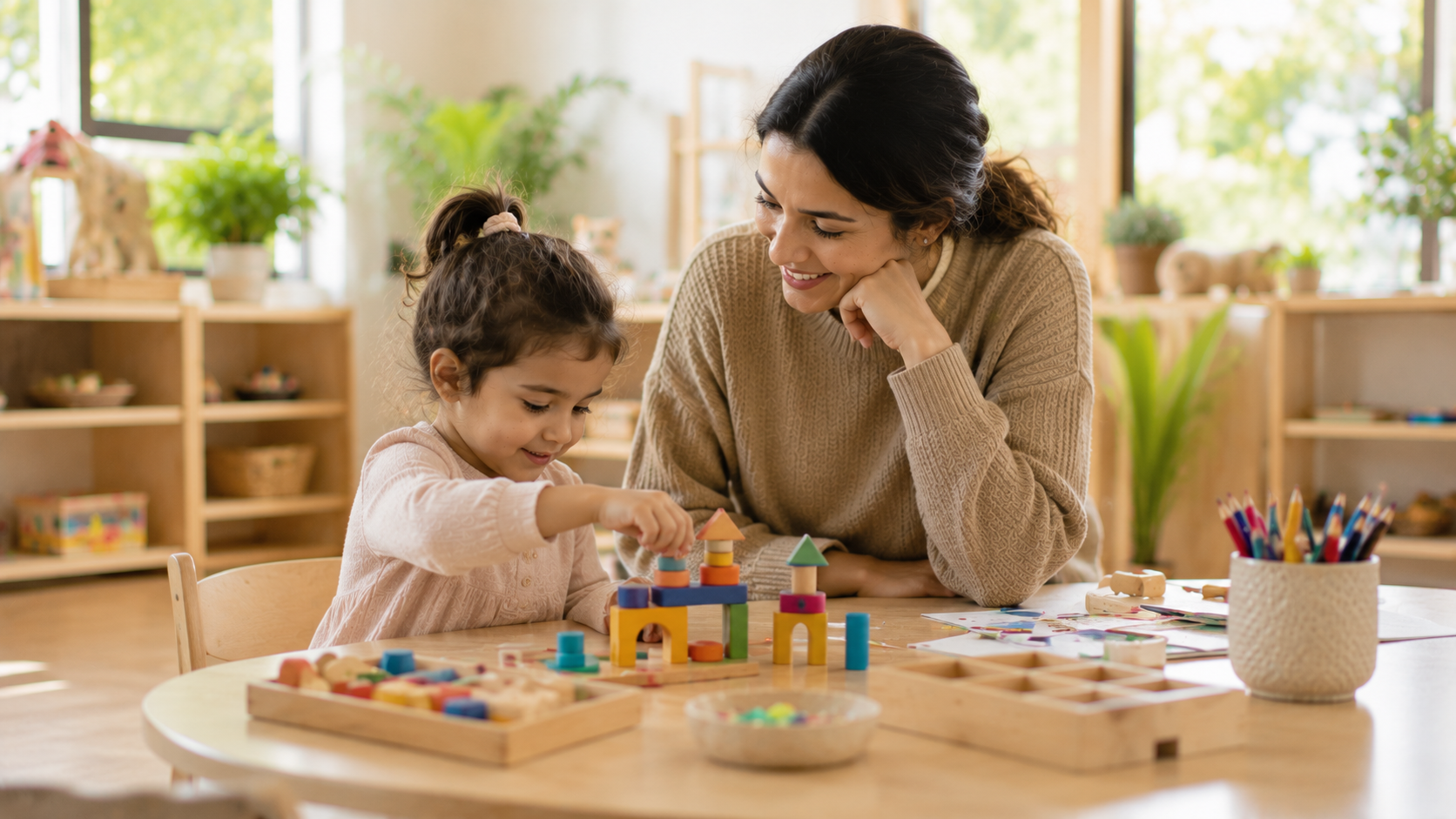
Play is one of the most powerful ways young children learn. Through imaginative games, construction activities, role play, puzzles, outdoor exploration and creative play, children naturally develop language, problem-solving, social skills and emotional understanding while thoroughly enjoying the learning process.
Simple activities often provide the richest opportunities for development. Building towers encourages mathematical thinking and coordination. Pretending to run a café or doctor's surgery develops communication, imagination and cooperation. Outdoor play allows children to investigate nature, strengthen physical skills and satisfy their natural curiosity about the world around them.
High-quality nursery, preschool and kindergarten programmes recognise the importance of play-based learning because it allows children to actively explore ideas rather than simply memorising information. Parents can support this approach at home by providing time, space and encouragement for children to play freely while joining in conversations that extend their thinking.
2. Develop Language Every Day
Language develops through everyday interactions rather than formal lessons alone. Every conversation, question, story and shared experience helps children build vocabulary, strengthen listening skills and become increasingly confident communicators.
Talking together throughout the day is one of the simplest and most valuable ways to support development. Describe what you are doing while cooking, discuss what you notice during walks, encourage children to explain their ideas and allow time for conversations rather than rushing to provide answers.
Young children benefit when adults listen attentively, respond thoughtfully and introduce new vocabulary naturally within everyday situations. These rich conversations help children develop communication skills that support learning across every subject as they progress through school.
3. Read Together Regularly
Reading together is one of the most rewarding experiences parents can share with young children. Beyond introducing books and stories, shared reading strengthens language development, imagination, concentration and emotional connection between parent and child.
Children do not need to sit quietly from beginning to end to benefit from books. Talking about the pictures, predicting what might happen next, asking questions and encouraging children to retell familiar stories all contribute to language development and comprehension.
Establishing a regular reading routine, perhaps before bedtime or during quiet moments each day, helps children associate books with enjoyment, comfort and curiosity rather than viewing reading as simply another educational task.
4. Build Social and Emotional Skills
Learning how to recognise emotions, cooperate with others and develop friendships is an important part of early childhood education. These skills support children's wellbeing and help them feel confident when joining nursery, preschool, kindergarten or later transitioning into Reception and primary school.
Parents can nurture these abilities by encouraging children to talk about their feelings, practise taking turns, solve simple disagreements calmly and show kindness towards others. Everyday family interactions provide valuable opportunities to develop empathy, patience and communication.
Play with siblings, relatives or other children also helps young learners understand sharing, teamwork and respecting different perspectives. These early social experiences provide important foundations for successful relationships throughout school and beyond.
5. Encourage Independence
Young children enjoy developing new skills when given opportunities to do things for themselves. Everyday tasks such as putting on shoes, tidying toys, washing hands, carrying small bags or helping prepare simple snacks all contribute to growing independence and confidence.
Allowing children time to practise these skills may sometimes take longer than doing them yourself, but each successful experience strengthens their belief that they are capable of managing new responsibilities. Mistakes are a natural part of learning and provide valuable opportunities for problem-solving and perseverance.
As children prepare for Reception or primary school, gradually encouraging greater independence helps them approach new routines with confidence while supporting their ability to adapt successfully to future learning environments.
6. Create Predictable Daily Routines
Young children thrive when their days follow familiar and predictable patterns. Regular routines help children understand what to expect, creating a sense of security that allows them to focus their energy on learning, exploring and building relationships.
Simple routines such as consistent wake-up times, shared meals, opportunities for play, reading before bed and regular sleep schedules all contribute to emotional wellbeing. These everyday habits also help children develop self-regulation, patience and confidence as they gradually learn to manage different parts of their daily routine.
Predictable routines are particularly valuable when children begin nursery, preschool, kindergarten or Reception. Maintaining familiar habits at home during these transitions provides reassurance while helping children adjust more comfortably to new environments and expectations.
7. Support Physical Development
Physical development plays an essential role in early learning. Running, climbing, jumping, balancing, drawing, painting and using scissors all help strengthen the coordination and motor skills children need for everyday activities and future classroom learning.
Outdoor learning offers particularly rich opportunities for physical development while encouraging curiosity and exploration. Parks, gardens and natural environments invite children to investigate, solve problems and build confidence through active play. These experiences also support wellbeing by allowing children to move freely and enjoy fresh air.
Fine motor skills are equally important. Activities such as building with construction toys, threading beads, drawing, colouring, modelling with clay or helping with simple household tasks strengthen the small muscles needed for writing, dressing independently and many other practical skills.
8. Nurture Curiosity and Creativity
Curiosity encourages children to become enthusiastic learners who ask questions, investigate ideas and enjoy discovering how the world works. Rather than providing every answer immediately, parents can encourage children to think, predict and explore together.
Creative activities such as painting, music, storytelling, imaginative play and simple craft projects allow children to express themselves while developing communication, problem-solving and flexible thinking. There is rarely a single "correct" outcome, giving children the confidence to experiment with new ideas and learn through experience.
Following children's interests can also lead to meaningful learning. A fascination with dinosaurs, insects, vehicles or space may inspire conversations, books, outdoor exploration and creative projects that naturally develop language, mathematics and scientific thinking without feeling like formal lessons.
9. Choose an Early Years Setting Carefully
Whether selecting a nursery, preschool, kindergarten or another early years setting, the quality of relationships and learning experiences is often more important than the number of structured academic activities on offer.
A positive early years environment should encourage children to explore, communicate, play and develop confidence through warm, supportive interactions with experienced educators. Opportunities for outdoor learning, creative activities, collaborative play and age-appropriate independence all contribute to healthy development.
Parents may also wish to consider how well a setting communicates with families and supports children as individuals. A strong partnership between home and educators helps create consistency, allowing children to feel secure while developing confidence both inside and outside the classroom.
10. Celebrate Individual Progress
Every child follows their own unique developmental journey. While milestones provide helpful guidance, children naturally acquire new skills at different rates depending on their personality, experiences and individual strengths.
Rather than comparing children with friends or siblings, celebrate personal progress. Learning to button a coat independently, sharing toys more confidently, recognising letters, asking thoughtful questions or becoming more willing to try unfamiliar activities are all meaningful achievements that deserve recognition.
Focusing on steady growth encourages children to enjoy learning without feeling pressured to compete with others. This positive approach helps build confidence while reinforcing the understanding that learning is a lifelong process rather than a race towards predetermined milestones.
Common Mistakes Parents Should Avoid
- Comparing children with others.
Every child develops at their own pace. Comparisons may create unnecessary pressure and overlook the many different ways children grow, learn and build confidence. - Pushing formal academics too early.
Young children learn most effectively through play, conversation, exploration and meaningful experiences. Focusing too heavily on worksheets or formal lessons may reduce opportunities for broader development. - Overlooking the value of play.
Play is not separate from learning—it is one of the primary ways young children develop language, creativity, problem-solving, social skills and confidence. - Overscheduling activities.
Children benefit from opportunities to rest, explore freely and engage in unstructured play. A balanced routine often provides greater developmental benefits than a timetable filled with organised activities. - Doing everything for children.
Allowing children to practise age-appropriate tasks independently helps develop resilience, confidence and practical life skills that support future learning. - Focusing only on milestones instead of overall development.
Progress is about much more than recognising letters or counting numbers. Communication, curiosity, emotional wellbeing, creativity and social development are equally valuable foundations for lifelong learning.
Frequently Asked Questions
Is my child learning enough through play?
Yes. Play provides valuable opportunities for children to develop communication, problem-solving, creativity, social skills and physical coordination. High-quality play encourages active learning and supports many of the skills children will continue developing throughout school.
When should my child start nursery?
There is no single age that suits every family or every child. Decisions often depend on individual development, family circumstances and the availability of high-quality early years settings. The most important consideration is choosing an environment where children feel safe, supported and encouraged to explore.
How can I prepare my child for Reception?
Preparing for Reception is less about formal academic learning and more about developing confidence, independence, communication and everyday routines. Reading together, encouraging children to manage simple tasks independently and talking positively about school all help children approach this new stage with confidence.
What if my child develops more slowly than friends?
Children naturally reach developmental milestones at different times. If you have concerns about your child's progress, discussing them with early years educators or healthcare professionals can provide reassurance and guidance. In many cases, variation in development is entirely normal.
How much screen time is appropriate during the early years?
Young children benefit most from active play, conversation, reading, outdoor exploration and face-to-face interaction. If screens are used, choosing high-quality age-appropriate content and enjoying it together can help create positive learning experiences while maintaining a healthy balance with other everyday activities.
Summary
The early years provide the foundation for a child's future learning, wellbeing and development. Through play, communication, exploration, creativity and supportive relationships, children gradually develop the confidence, curiosity and independence that prepare them for school and for life beyond the classroom.
Parents do not need to create perfect learning environments or accelerate every aspect of development. Everyday experiences—reading stories, having conversations, exploring outdoors, encouraging imaginative play and sharing family routines—often provide the richest opportunities for learning.
When children feel loved, secure and encouraged to explore the world around them, they develop the resilience, communication skills and enthusiasm that support lifelong learning. These early experiences become the building blocks upon which future education, relationships and personal growth continue to flourish.
Daresni Tip: The most valuable early learning happens through everyday moments. Talking, reading, playing and exploring together help build the confidence, curiosity and skills that support lifelong learning.