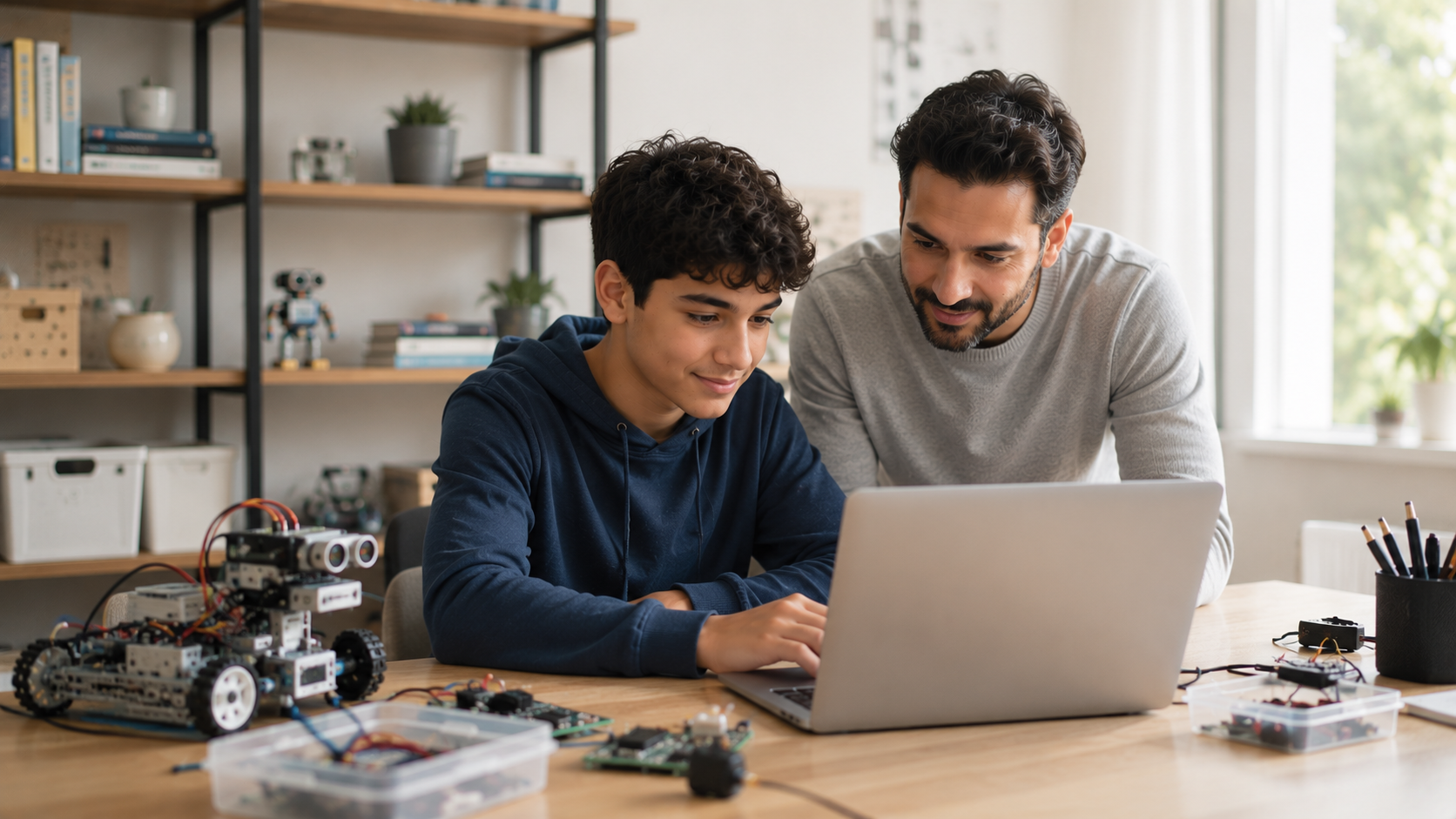
Getting Started with Coding
Coding has become one of the most valuable skills children can develop in today's digital world. While only a small percentage of students may eventually become software engineers, learning to code teaches much more than programming. It helps children develop logical thinking, creativity, problem-solving, persistence and confidence—skills that are useful in almost every future career.
Many parents are interested in introducing their children to coding but are unsure when to begin, which programming language to choose or whether their child even needs to learn it. The good news is that coding is no longer reserved for technology specialists. With age-appropriate tools and supportive guidance, children can begin exploring programming in an enjoyable and accessible way.
Whether your child enjoys mathematics, science, art, storytelling or gaming, coding provides opportunities to create, experiment and solve problems. Understanding how to get started allows parents to support learning without feeling they need to become programmers themselves.
Why This Matters
Technology is now part of almost every industry, from healthcare and engineering to finance, education, design and entertainment. Even careers that are not directly related to software increasingly benefit from digital literacy and computational thinking.
Learning to code helps children understand how technology works instead of simply consuming it. Rather than only using apps, websites and games, they begin to appreciate how digital products are designed, built and improved.
Perhaps most importantly, coding teaches children that mistakes are a natural part of learning. Programs rarely work perfectly the first time, encouraging students to experiment, identify problems and improve their solutions through patience and persistence.
Practical Guidance
1. Understand What Coding Really Is
Coding is the process of giving instructions to a computer so it knows what to do. These instructions are written using programming languages, each designed for different purposes.
Children do not need to memorise complicated commands when they first begin. Early coding activities often focus on recognising patterns, organising ideas and solving simple problems before introducing more advanced programming concepts.
Helping children understand that coding is simply another way of communicating ideas makes the subject feel far less intimidating.
2. Start at the Right Age and Level
There is no perfect age to begin coding. Instead, the most important consideration is choosing activities that match your child's developmental stage and interests.
Younger children often enjoy visual programming environments that use colourful blocks to build simple programs without typing complex code. As they grow older and become more confident, they can gradually transition to text-based programming languages.
Progressing at a comfortable pace builds confidence and helps children enjoy the learning process rather than feeling overwhelmed.
3. Choose Tools That Make Learning Fun
Children learn best when they are actively engaged. Many beginner-friendly coding platforms use games, animations and interactive challenges that introduce programming concepts through play.
Depending on your child's age and interests, coding activities may include:
- Creating simple games.
- Building animations.
- Designing interactive stories.
- Programming robots.
- Developing basic mobile apps.
- Exploring beginner web design projects.
Projects that produce visible results often keep children motivated because they can immediately see what they have created.
4. Focus on Problem-Solving Rather Than Memorisation
One of the biggest misconceptions about coding is that success depends on memorising programming commands. In reality, experienced programmers spend far more time solving problems than recalling syntax.
Encourage your child to think through challenges step by step. Ask questions such as:
- What are you trying to achieve?
- What happened?
- Why do you think it behaved that way?
- What could you try next?
This develops analytical thinking and resilience while reducing frustration when mistakes occur.
5. Encourage Creativity Alongside Technical Skills
Coding is often viewed as a technical subject, but it is also highly creative. Children can use programming to build games, compose music, create digital artwork, tell stories or design interactive experiences.
Allowing children to choose projects that reflect their personal interests helps maintain enthusiasm and demonstrates that coding can support many different passions, not just technology.
6. Learn Through Small, Achievable Projects
Large projects can feel intimidating for beginners. Instead, encourage your child to complete small projects that introduce one new concept at a time.
Examples include creating a simple animation, building a quiz game, programming a moving character or designing an interactive greeting card. Completing these projects gives children a sense of accomplishment while steadily developing their confidence.
7. Introduce Programming Languages Gradually
As children become more confident, they can begin exploring different programming languages. Each language has its own strengths, and there is no single "best" option for every learner.
For example, some languages are well suited to creating websites, while others are commonly used for game development, data analysis or mobile applications. The goal at the beginner stage is not to master multiple languages but to understand the underlying concepts that apply across all forms of programming.
Parents should avoid worrying too much about choosing the "perfect" language. Once children understand the fundamentals of coding, learning additional languages becomes much easier over time.
8. Learn with the Support of a Mentor or Tutor
While many children enjoy exploring coding independently, having guidance from an experienced educator can make learning more enjoyable and less frustrating. A mentor or coding tutor can explain difficult concepts, answer questions and provide structured challenges that match a child's ability.
Regular encouragement also helps children build confidence when they encounter mistakes or more complex programming concepts. Instead of simply giving answers, a good mentor encourages children to think through problems and discover solutions independently.
Whether support comes from a teacher, tutor, coding club or parent, learning alongside someone who celebrates progress can significantly improve motivation and long-term success.
9. Balance Screen Time with Hands-On Learning
Although coding happens on a computer, learning does not always need to involve a screen. Many activities help children develop computational thinking without using technology.
Examples include:
- Logic puzzles.
- Board games that encourage strategic thinking.
- Building with construction sets.
- Planning step-by-step instructions for everyday tasks.
- Simple robotics and electronics projects.
These experiences strengthen the same problem-solving skills that support programming while helping children maintain a healthy balance between digital and offline activities.
10. Encourage Persistence and Celebrate Progress
Every programmer, regardless of experience, encounters errors and unexpected results. Learning to identify problems, test different solutions and improve gradually is one of the most valuable lessons coding provides.
Rather than expecting projects to work perfectly on the first attempt, encourage your child to view mistakes as opportunities to learn. Celebrating perseverance, creativity and curiosity helps build resilience that extends far beyond programming.
Recognising small achievements—such as completing a first project or solving a difficult challenge—keeps motivation high and reinforces the idea that progress happens one step at a time.
11. Think Beyond Future Careers
Many parents introduce coding because they believe it will lead to technology careers. While programming certainly opens exciting professional opportunities, its greatest value often lies in the transferable skills children develop along the way.
Coding strengthens logical reasoning, communication, creativity, planning, collaboration and analytical thinking. These skills are valuable in fields such as medicine, engineering, architecture, finance, education, business, design and scientific research.
By viewing coding as a way to develop lifelong thinking skills rather than simply preparing for one career, parents can help children approach learning with greater confidence and curiosity.
Common Mistakes
- Starting with projects that are too advanced.
- Focusing on memorising programming commands instead of understanding concepts.
- Expecting children to learn at the same pace as others.
- Correcting every mistake instead of encouraging problem-solving.
- Choosing coding activities that don't match a child's interests.
- Assuming coding is only useful for future software engineers.
- Forgetting to balance screen-based learning with offline activities.
Practical Checklist
- Choose age-appropriate coding activities.
- Focus on understanding concepts before learning programming languages.
- Encourage creativity through games, stories and projects.
- Support problem-solving instead of providing immediate answers.
- Celebrate effort, persistence and gradual improvement.
- Consider learning with a coding tutor, mentor or club.
- Balance coding with hands-on activities and outdoor play.
- Keep learning enjoyable and free from unnecessary pressure.
Frequently Asked Questions
What is the best age for children to start coding?
Children can begin exploring basic coding concepts from an early age using visual, game-based activities. As they grow older, they can gradually transition to text-based programming languages. The most important factor is choosing activities that match their age, confidence and interests.
Does my child need to be good at mathematics to learn coding?
No. While some areas of programming involve mathematics, beginner coding focuses much more on logical thinking, creativity and problem-solving. Many children who enjoy storytelling, art or games also thrive when learning to code.
Which programming language should beginners learn first?
There is no single best choice. Many children begin with visual programming platforms before progressing to beginner-friendly text-based languages. Developing strong problem-solving skills is more important than choosing a particular programming language.
Can coding become too much screen time?
Like any digital activity, balance is important. Combining coding with sports, reading, creative hobbies and outdoor play helps children develop a healthy relationship with technology while continuing to enjoy its educational benefits.
Should my child learn coding if they don't want to become a programmer?
Absolutely. Coding develops critical thinking, creativity, communication, resilience and analytical skills that are valuable across many careers and everyday situations, regardless of whether a child eventually works in technology.
Final Thoughts
Learning to code is about much more than writing computer programs. It helps children become confident problem-solvers who are willing to experiment, think logically and approach challenges with curiosity. As technology continues to shape the world around us, these skills will become increasingly valuable in education, the workplace and everyday life.
Parents do not need to be programmers themselves to support their child's coding journey. By providing encouragement, choosing age-appropriate learning opportunities and celebrating steady progress, families can help children develop confidence and discover the enjoyment of creating with technology.
Daresni Tip:
Encourage your child to create something meaningful rather than simply completing coding exercises. Whether it's a simple game, an animation, a story or a robotics project, building something they're proud of is one of the best ways to develop lasting confidence and a genuine love of technology.