Nurturing Creativity Through Art
Creativity is one of the most valuable skills a child can develop, and art provides one of the most powerful ways to nurture it. Through drawing, painting, sculpture, crafts and other creative activities, children learn to express their ideas, explore their imagination and build confidence in their own abilities. While some children may eventually pursue careers in the creative industries, every child benefits from developing creativity as part of a well-rounded education.
Many parents wonder whether artistic ability is something children are born with or whether it can be developed over time. In reality, creativity grows through encouragement, practice and opportunities to experiment. The goal of art education is not to produce perfect paintings or sculptures but to help children become curious thinkers who are comfortable expressing themselves and exploring new ideas.
Whether your child enjoys sketching at home, experimenting with paint, building models or attending structured art lessons, understanding how creativity develops can help you support their confidence and lifelong love of learning.
Why This Matters
Art is much more than an enjoyable hobby. Creative activities support cognitive development, fine motor skills, observation, communication, emotional wellbeing and problem-solving. As children create, they learn to make decisions, overcome challenges and discover that there are often many different ways to approach the same task.
Creativity is increasingly recognised as an essential life skill. Whether children eventually become doctors, engineers, entrepreneurs, designers, teachers or scientists, they will benefit from being able to think creatively, adapt to new situations and generate original ideas. Artistic experiences help build these transferable skills while encouraging confidence, resilience and self-expression.
Parents play an important role by creating an environment where creativity is celebrated, experimentation is encouraged and mistakes are viewed as valuable opportunities to learn.
Practical Guidance
1. Understand That Creativity Can Be Developed
Many people believe that artistic talent is something children either have or do not have. In reality, creativity develops through regular opportunities to explore, practise and experiment. Like reading, music or sport, artistic ability grows with encouragement and experience.
Every child approaches creativity differently. Some enjoy drawing detailed pictures, while others prefer painting, sculpture, photography, digital illustration or mixed-media projects. Allowing children to explore different forms of art helps them discover their own interests and strengths.
The goal should always be progress rather than perfection. Every creative experience builds confidence and develops new skills.
2. Create an Environment That Inspires Creativity
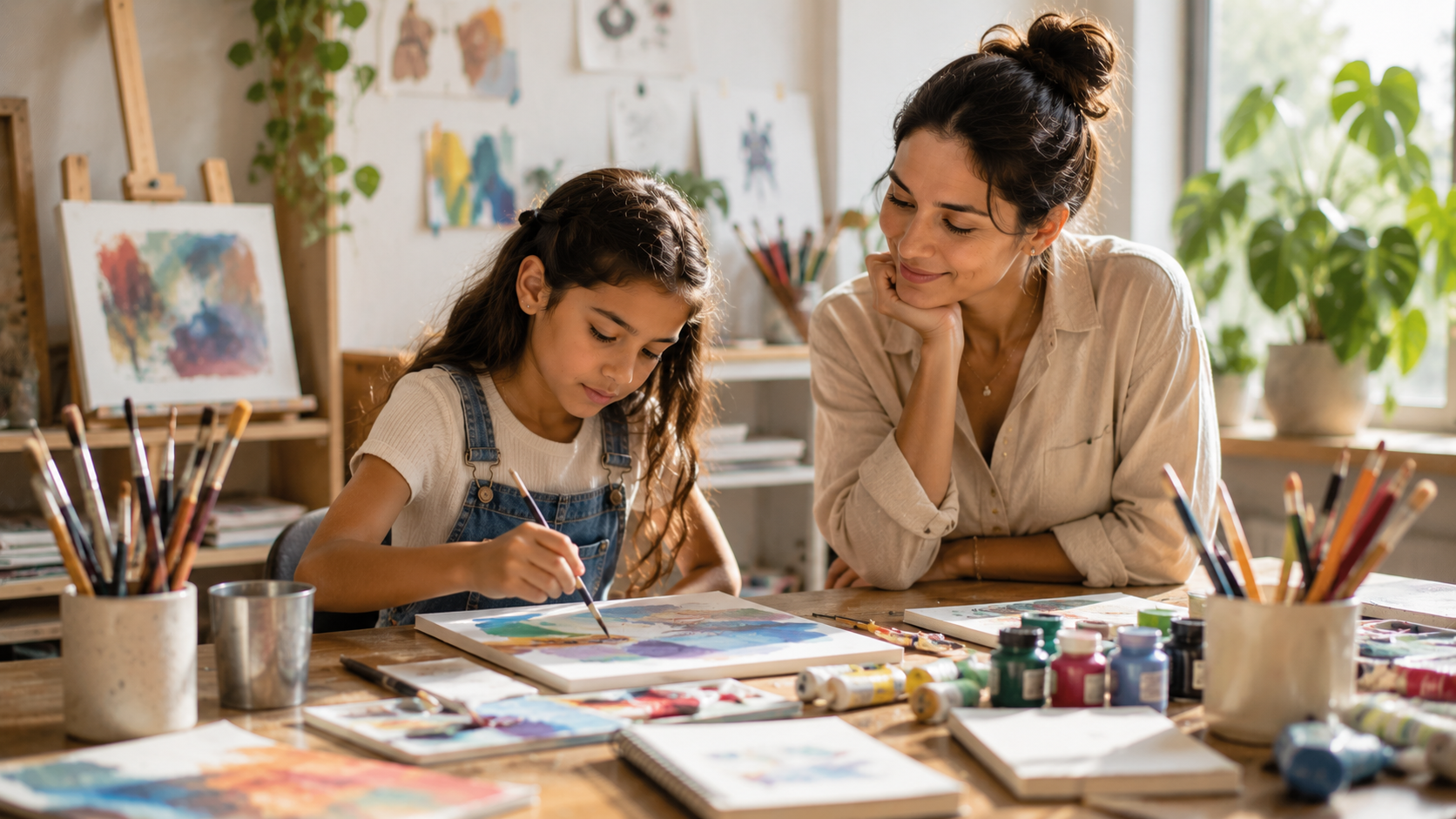
Children are naturally curious, and a welcoming creative space encourages them to explore their ideas independently. This does not require a professional art studio or expensive equipment. A simple table with accessible materials is often enough to inspire regular creative activity.
Consider keeping a selection of materials readily available, such as:
- Sketchbooks.
- Drawing pencils and coloured pencils.
- Paints and brushes.
- Paper in different sizes and textures.
- Markers and crayons.
- Glue, scissors and recycled craft materials.
- Clay or modelling materials.
When children can easily access creative materials, they are more likely to experiment, practise and create without waiting for organised lessons.
3. Celebrate the Creative Process, Not Just the Finished Artwork
One of the most valuable lessons parents can teach is that creativity is about exploration rather than producing perfect results. Children often learn the most while experimenting, making mistakes and discovering new techniques.
Instead of focusing only on how a finished piece looks, praise qualities such as imagination, persistence, curiosity and effort. Ask questions like:
- What inspired this idea?
- How did you choose these colours?
- What was the most enjoyable part of creating it?
- If you made it again, what would you do differently?
These conversations encourage reflection and help children develop confidence in their own creative thinking.
4. Explore Different Forms of Art
Art is incredibly diverse, and exposing children to different creative disciplines helps them discover what they genuinely enjoy. Some children love painting, while others are drawn to photography, sculpture, ceramics, fashion design or digital illustration.
Encourage your child to experiment with activities such as:
- Painting and drawing.
- Sculpture and pottery.
- Photography.
- Printmaking.
- Collage and mixed media.
- Textile and fabric art.
- Digital illustration.
- Craft and design projects.
Trying different artistic mediums broadens children's experiences and teaches them that creativity can be expressed in many different ways.
5. Encourage Observation and Curiosity
Great artists begin by learning to observe the world carefully. Encourage your child to notice colours, textures, shapes, patterns, light and shadow during everyday activities. Observation strengthens both artistic ability and creative thinking.
Simple experiences such as visiting parks, museums, galleries, markets or even walking around your neighbourhood can become opportunities to discuss design, architecture, nature and visual storytelling. Encouraging children to ask questions about what they see helps develop curiosity alongside artistic skills.
6. Make Creativity Part of Everyday Life
Creativity should not be limited to formal art lessons. Small creative opportunities throughout the week help children develop confidence naturally while reinforcing that art is an enjoyable part of everyday life.
Encourage activities such as keeping a sketchbook, illustrating stories, designing greeting cards, decorating notebooks, creating seasonal crafts or sketching objects they observe at home. These simple habits help children develop consistency while making creativity a normal part of their routine.
Regular creative practice also teaches patience and perseverance, reminding children that improvement comes through experience rather than immediate perfection.
7. Learn from Great Artists Without Copying Them
Introducing children to famous artists can inspire new ideas and broaden their understanding of creativity. Exploring different artistic styles helps children see that there is no single "correct" way to create art. From realistic landscapes and portraits to abstract paintings and modern sculpture, every artist approaches creativity differently.
Rather than encouraging children to copy existing artwork exactly, invite them to observe different techniques, colours and compositions before creating something original inspired by what they have learned. This develops appreciation for art while encouraging independent thinking and self-expression.
8. Give Children the Freedom to Make Creative Choices
Creativity flourishes when children have opportunities to make their own decisions. Choosing colours, materials, subjects and techniques helps children develop confidence, independence and ownership of their work.
It can be tempting to suggest improvements or demonstrate how something "should" look, but allowing children to experiment—even when the result is unexpected—often leads to greater creativity and problem-solving. Open-ended projects encourage imagination far more effectively than activities with only one expected outcome.
Parents can support this by offering guidance when needed while allowing children to remain the creative decision-makers.
9. Use Art to Build Confidence and Emotional Expression
Art provides children with a safe and meaningful way to express thoughts and emotions that may be difficult to communicate through words alone. Drawing, painting and other creative activities often help children process experiences, celebrate achievements and work through challenges in a calm and positive way.
Rather than asking whether a piece of artwork is "good," ask your child what it represents or how it made them feel while creating it. These conversations reinforce that art is a form of personal expression rather than a competition.
Children who feel their ideas are valued often become more confident in expressing themselves both creatively and socially.
10. Encourage Creativity Beyond Art Lessons
Creativity is not limited to the art room. It influences how children solve problems, design solutions and approach challenges across many different subjects. Encourage your child to think creatively in everyday situations, whether they are building with construction toys, designing a science project, writing a story or finding a new way to organise their bedroom.
Helping children recognise creativity in different aspects of life reinforces that creative thinking is a valuable skill that can be applied in almost every situation, both in school and beyond.
11. Support Lifelong Creative Confidence
One of the greatest gifts parents can give is the confidence to continue creating without fear of making mistakes. Many adults stop drawing, painting or making art because they become overly concerned about producing perfect results. Children who grow up believing that creativity is about exploration rather than perfection are more likely to continue expressing themselves throughout their lives.
Whether your child becomes an architect, engineer, teacher, entrepreneur, designer or scientist, creative confidence will help them generate ideas, solve problems and adapt to new challenges. These qualities are increasingly valuable in a rapidly changing world.
By encouraging curiosity, celebrating originality and making creativity part of everyday life, parents help lay the foundation for lifelong learning and innovation.
Common Mistakes
- Focusing only on the finished artwork instead of the creative process.
- Comparing your child's artistic ability with others.
- Correcting or changing your child's artwork.
- Believing creativity is only important for naturally artistic children.
- Providing activities with only one "right" answer.
- Expecting perfect results instead of encouraging experimentation.
- Limiting creativity to scheduled art lessons.
Practical Checklist
- Provide accessible art materials at home.
- Encourage creativity without focusing on perfection.
- Introduce different forms of artistic expression.
- Visit museums, galleries or creative exhibitions together.
- Ask questions about your child's creative choices.
- Celebrate originality, effort and curiosity.
- Support regular creative activities throughout the week.
- Allow children to make their own artistic decisions.
Frequently Asked Questions
Does my child need to be naturally talented to enjoy art?
No. Creativity is a skill that develops through practice, encouragement and exploration. Every child can benefit from artistic experiences, regardless of their current ability.
How often should children participate in art activities?
Short, regular creative experiences are often more beneficial than occasional long sessions. Encouraging creativity a few times each week helps children build confidence while keeping art enjoyable.
Should I correct my child's artwork?
Rather than correcting artwork, encourage discussion about their ideas and creative choices. Asking thoughtful questions helps children develop confidence and reflect on their own work without feeling judged.
Can digital art be as valuable as traditional art?
Yes. Both traditional and digital art encourage creativity, problem-solving and self-expression. Providing opportunities to explore different artistic mediums helps children develop a broad range of creative skills.
How can I encourage creativity if I don't consider myself artistic?
You don't need artistic experience to support your child. Providing materials, showing genuine interest, visiting creative spaces together and celebrating effort are often far more valuable than demonstrating artistic techniques.
Final Thoughts
Art gives children the freedom to imagine, experiment and express themselves in ways that build confidence far beyond the classroom. Through creative experiences, they learn to observe carefully, solve problems, communicate ideas and develop resilience when things do not go as planned.
By creating an encouraging environment where creativity is valued and perfection is never the goal, parents can help children develop skills that will benefit them throughout their education, future careers and everyday lives. The confidence gained through creating something original often becomes one of the most lasting gifts art can provide.
Daresni Tip: Display your child's artwork at home—not because it is perfect, but because it represents their ideas, imagination and effort. Celebrating creativity sends a powerful message that their thinking and self-expression are valued.